
I thought I’d share some thoughts about diesel engines. I’m by no means a professional mechanic nor do I want to be one. I’m slow, I smash my knuckles, and if a job is too complicated or difficult I seek professionals. I have a 2-post lift in my shop just because I’m too old to be crawling under vehicles anymore.
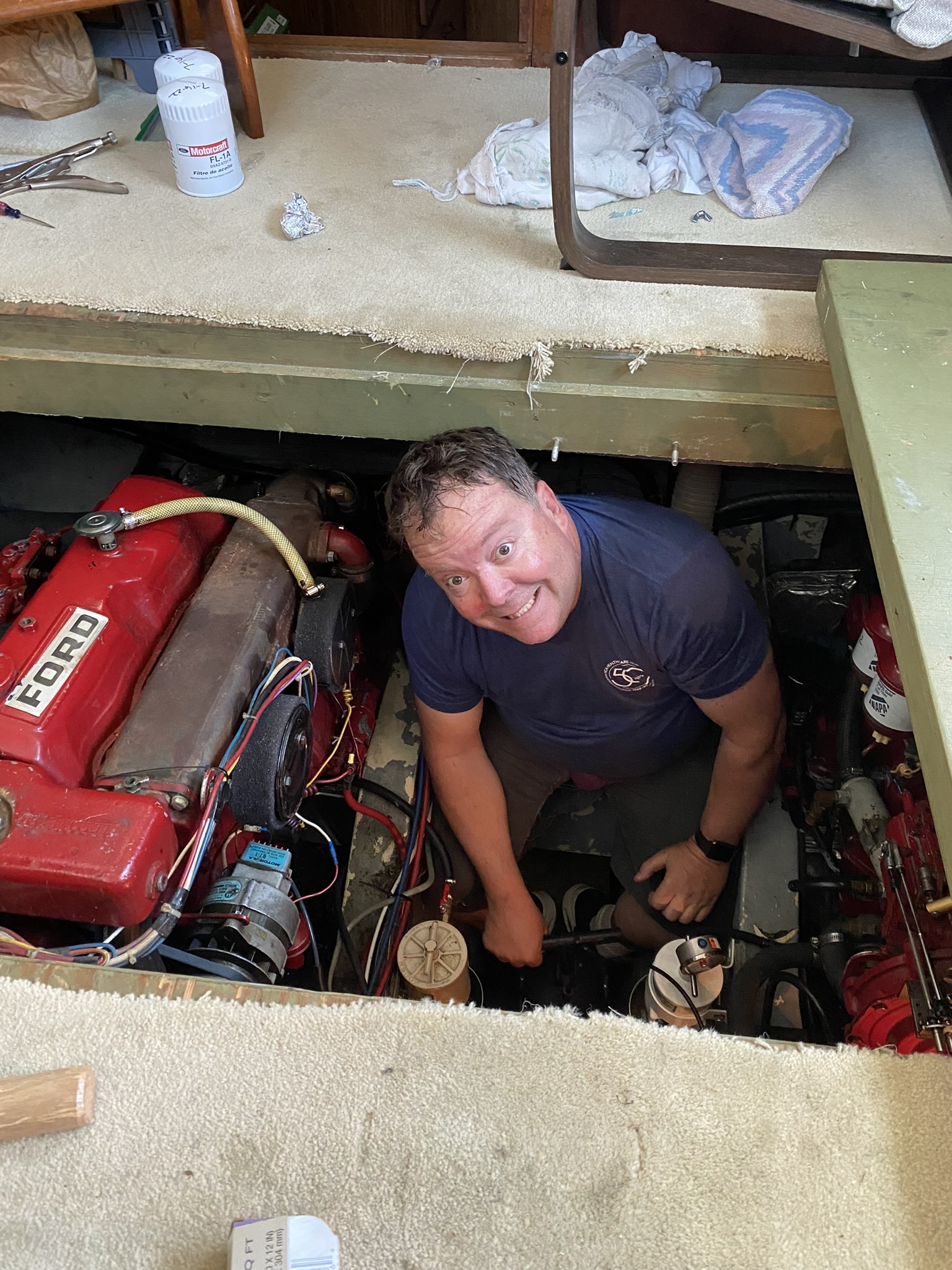
What are the differences between gas and diesel?
I’m OK at keeping a gasoline engine running. I’m going to assume for the purposes of this article you know the basics of a gasoline engine. Spark plugs, compression, fuel and air and it’ll run.
Ignition
A gasoline engine ignition source (what causes the explosion inside the cylinder) is the spark plug. At the right time, when the right amount of air and gas are in the cylinder, the intake and exhaust valves are basically closed, the spark plug sparks to ignite the air and fuel and forces the piston down, turning the crankshaft.
A little about diesel fuel – you can’t set it on fire easily. In a controlled environment like a bonfire in the backyard, pour a capful of diesel on a piece of wood and light it with a match. It’s not easy. Don’t even experiment with gasoline as it’s so flammable. So how does it ignite? On a diesel engine, the piston comes down on the hot diesel vapor and air, compresses the mixture so hard that the diesel explodes, giving up its stored energy.
A diesel engine has a huge amount of compression compared to a gasoline engine, so much so everything has to be much stronger – heads, cylinder walls, crank, pistons and connecting rods. That’s how a diesel creates so much energy at low RPM’s.
Glow Plugs
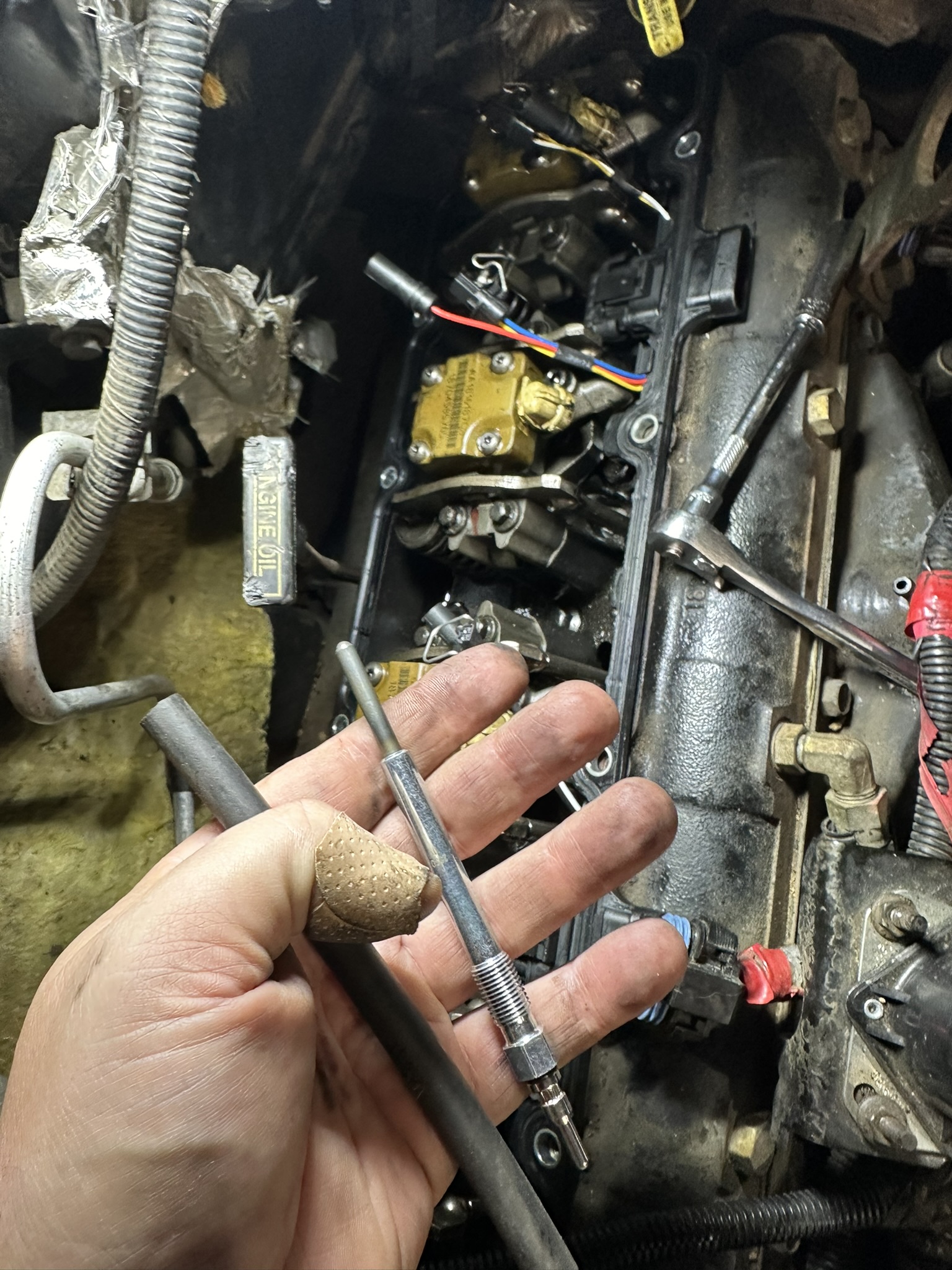
As I mentioned above, ignition happens while the engine is hot, the inside the cylinder is hot. It makes that ignition happen easier. Some engines have glow plugs to warm the cylinders when the engine is cold. The 3-cylinder engine on my New Holland tractor glow plugs is activated by turning the start key halfway, where you hold it for so many seconds before attempting to start. On my 1997 F250 Powerstroke 7.3, you turn the key to on, the WAIT light comes on while the glow plugs warm, and when the light goes out you start the engine. There’s nothing interesting about a glow plug, it’s simply a resistive load like any heating element.
You can measure the resistance of a glow plug with an Ohm meter. It has to be disconnected from whatever is powering it or your ohm meter will read the resistance of your vehicle, not the glow plug. Put one lead on the center of the glow plug and one on the body.
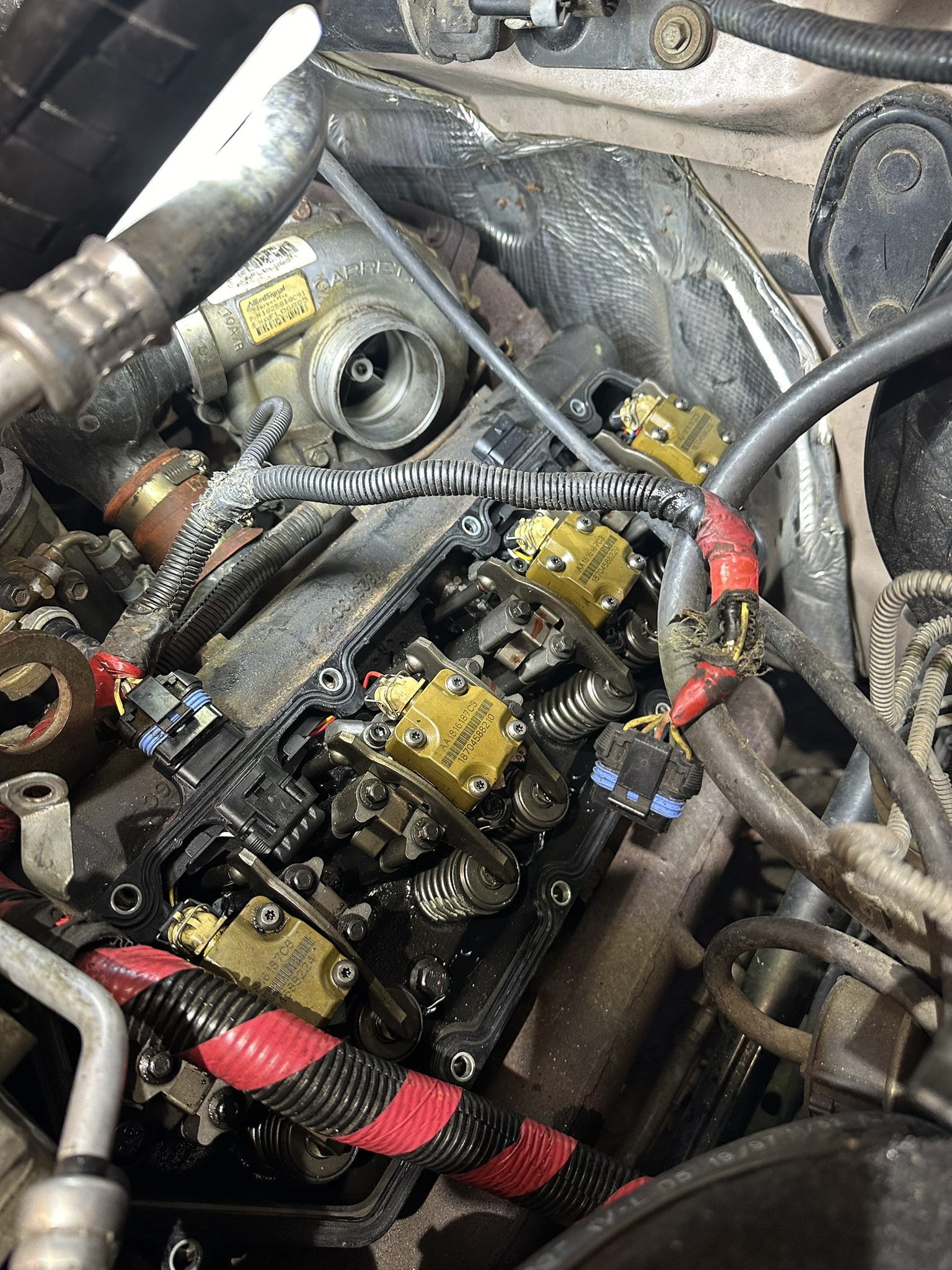
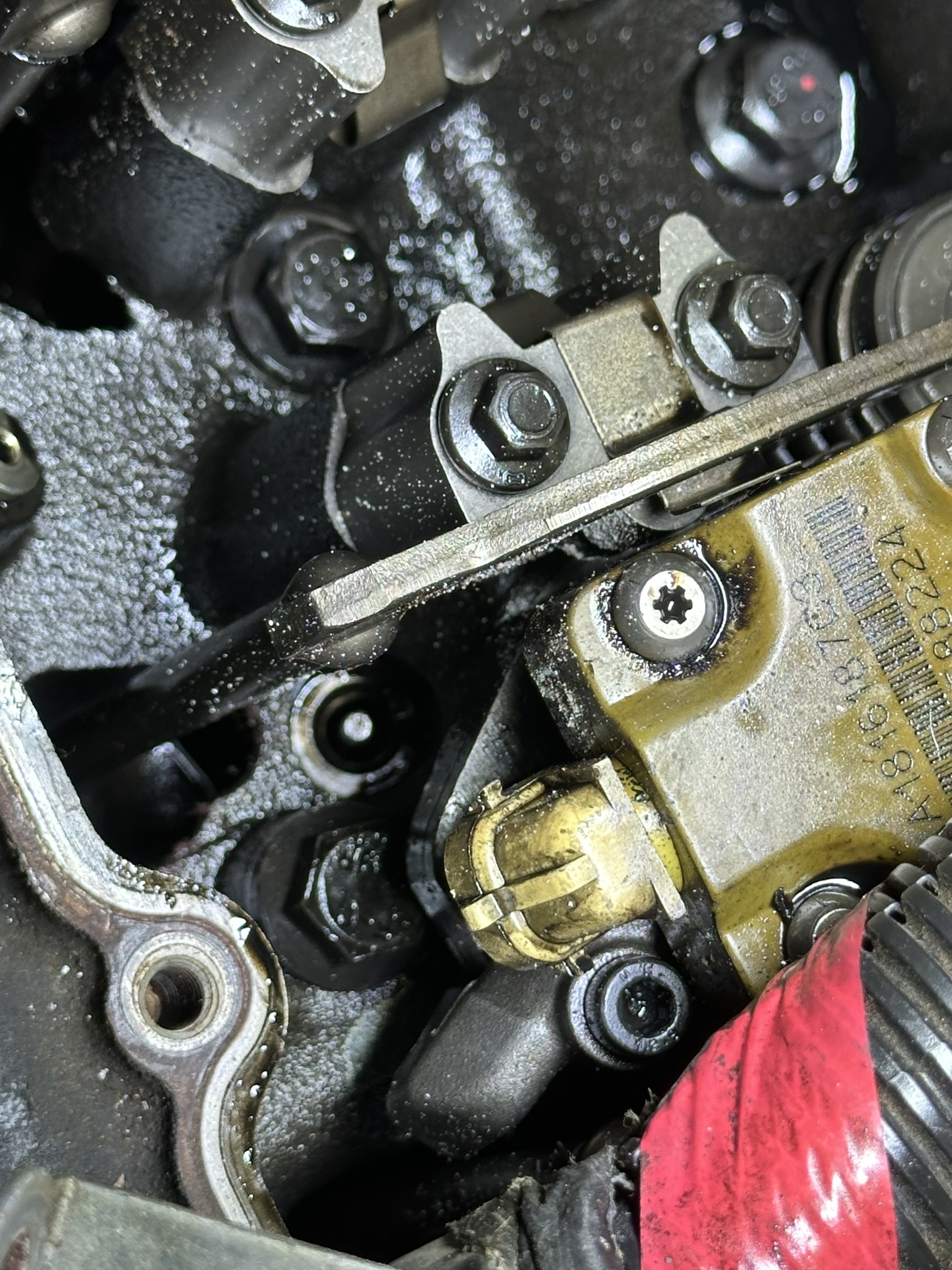
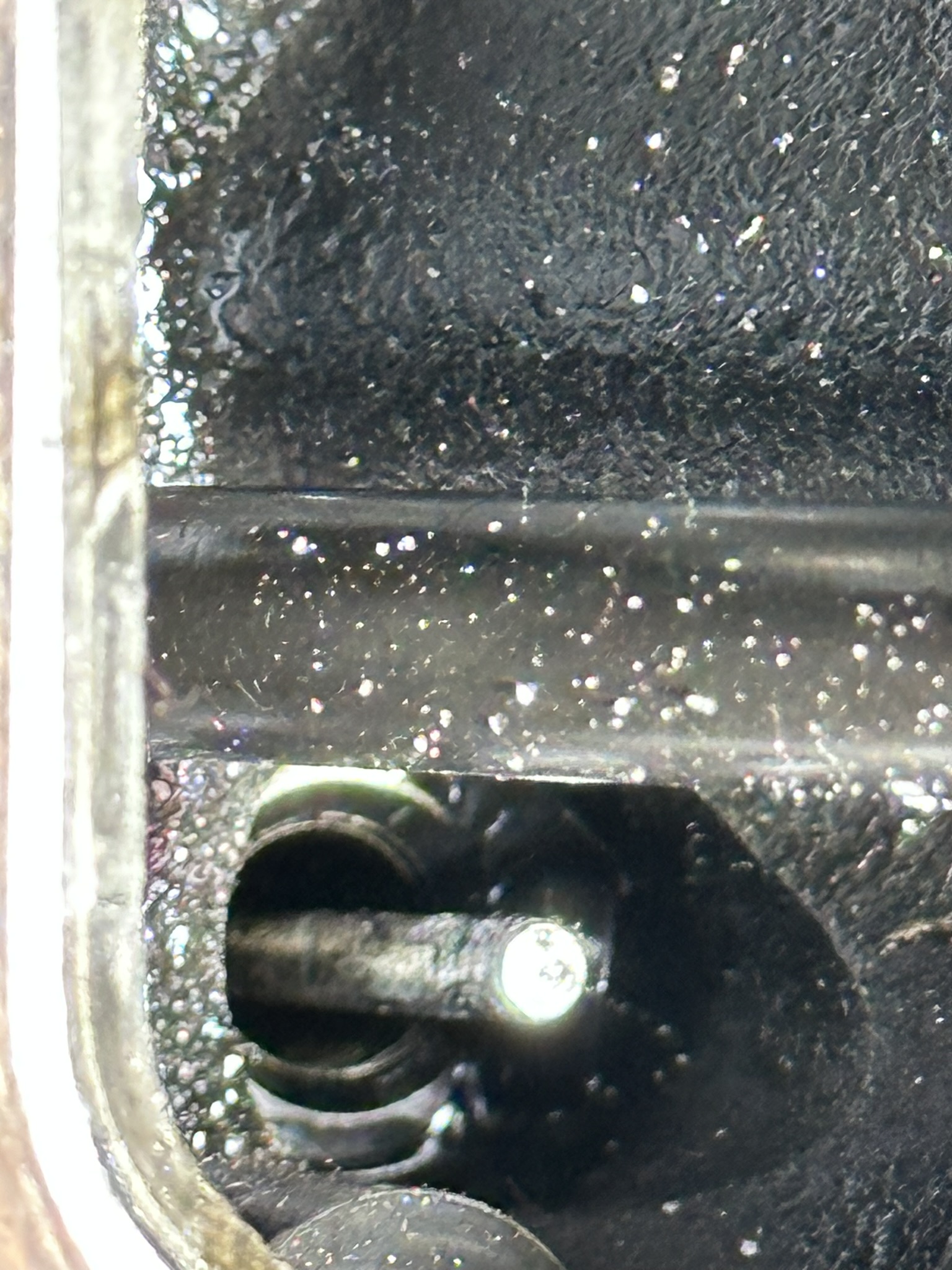
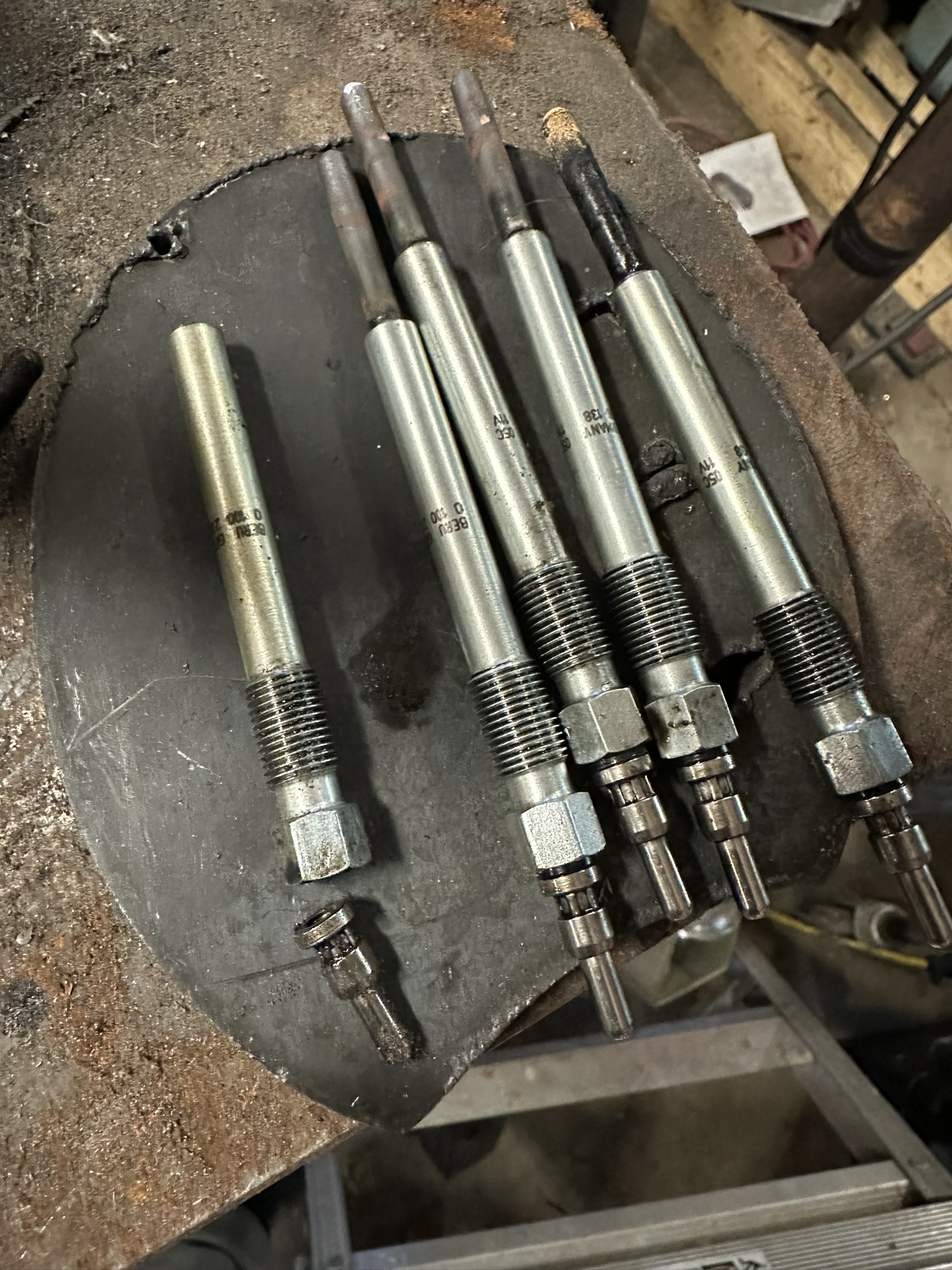
On our F250 Powerstroke, I suspected a problem with my glow plugs. It’s an 8-cylinder engine, and one glow plug per cylinder. The glow plugs are accessible UNDER the valve covers, which makes the job a little bit of a pain. You can measure the resistance through the wiring harness connectors on the side of the valve cover gasket. The interesting thing about these glow plugs is after many years the tips can break off or the glow plug can swell or come apart when extracting it.
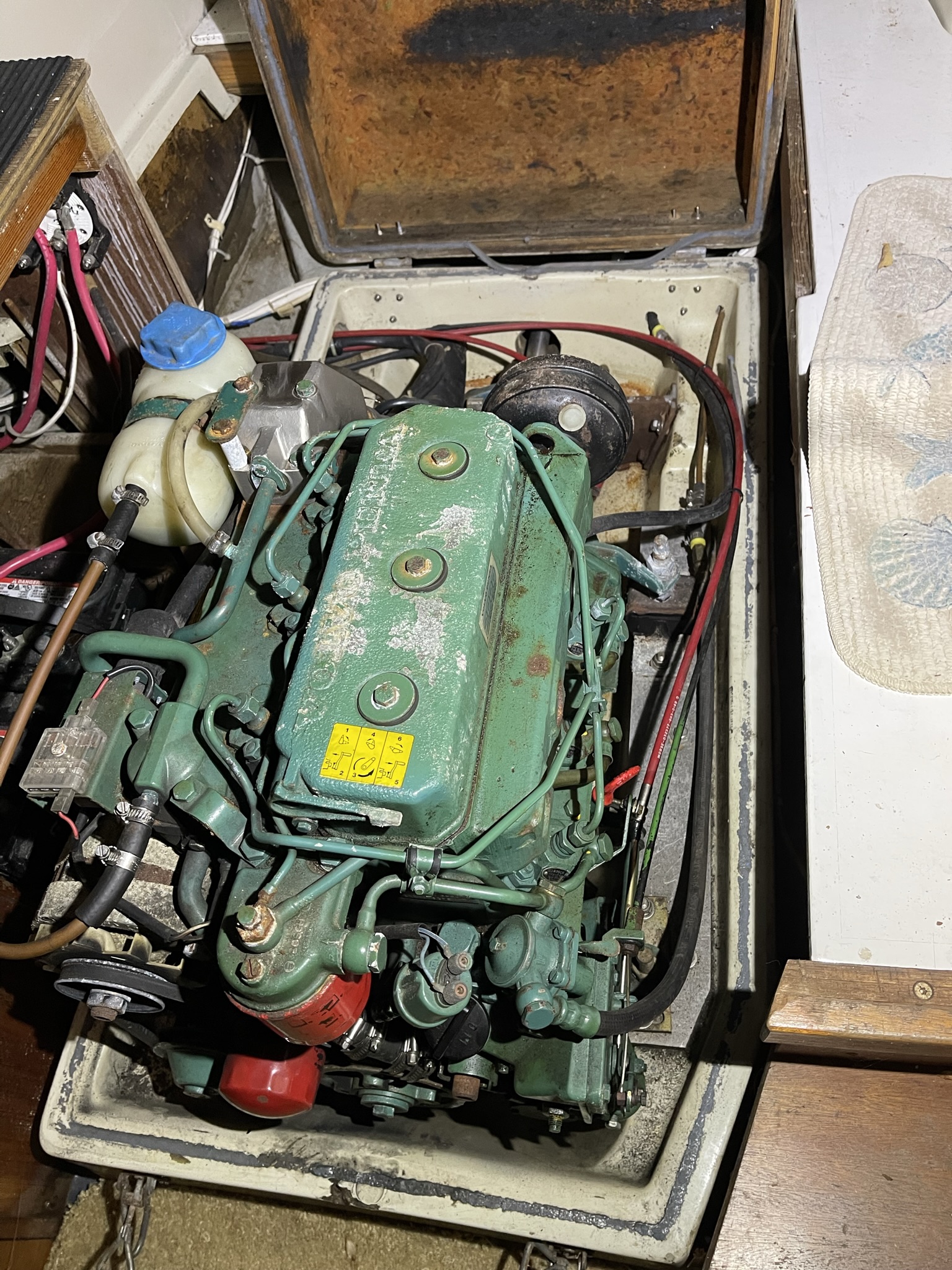
My Ford Lehman 80hp engines on Rock and Roll do not have glow plugs. They just run so easy they’re not needed. My little 26hp Volvo Penta diesel on the Albin 25 didn’t have glow plugs either.
Carburetor Versus Injectors
The carburetor on a gas engine regulates the mix of gasoline and air at the intake of the heads and the cylinders. As the piston goes down, air and fuel are sucked in through the carburetor in preparation for ignition inside the cylinder. A diesel engine only sucks in air as the cylinder goes down. The fuel is injected directly into EACH cylinder or right at the intake valve by the injector.
Injectors are complicated gadgets. I’m going to talk briefly about pumps in the next section. When the incoming fuel from the diesel injector pump reaches a certain pressure, the injector opens (pops) and releases high pressure fuel through a spray head into the cylinder in preparation for ignition. The flow rate of the fuel, the pressure as well as the spray pattern are all important for a smooth running engine. Think of that garden hose end sprayer that drips while you have it on mist setting. That’s not good for a diesel engine.
Fuel lines between the injector pump and the injectors carry very high pressure, like 2000+ PSI. They’re usually made of metal. If they have a tiny hole in them, they can mist the engine compartment with fuel. Sometimes you can find these leaks by wrapping the injector lines with tissue paper. It’s important to use crush washers or whatever the engine calls for to ensure tight tight paths to the injectors.
If your injectors are suspect, you may be able to pull them, take them to a good diesel shop, and have them serviced. The injectors on my truck are electronically fired and are VERY expensive to replace. I think all mine are working fine for now.
Injector Pump
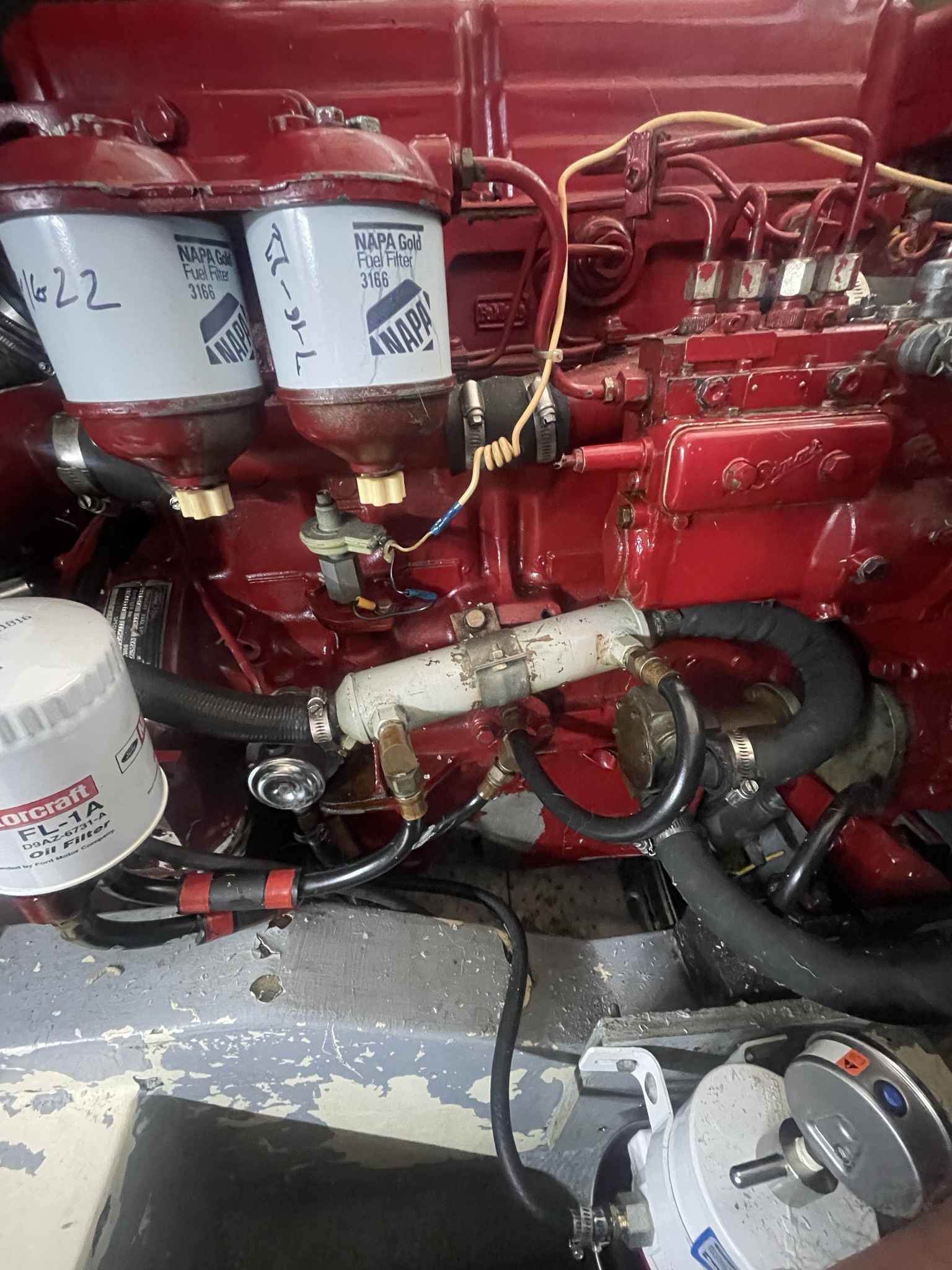
The injector pump is a precision pump that pushes fuel to the injector in each cylinder, in the correct order, at the right time. The guts are very complicated. The act of the fuel moving through the pump at high pressure draws fuel for the next cycle. The injector pump cannot function if air gets into the pump. If air enters the injector pump, it will need to be bled. I’ll cover that briefly farther down.
Note that if water EVER gets into your injector pump, or your engine mysteriously quits running and you suspect water, DO NOT leave it to mess with next weekend. The water will rust the precision parts inside your injector pump and it will have to be rebuilt or replaced. This could happen to one’s tractor while it was very cold out, and someone doesn’t want to mess with it anymore tonight. Well, you need to mess with it or plan to pay some bucks, like 500 of them, if you remove the injector pump yourself.
Lift Pump
Gas engine and diesel engine lift pumps work in the exact same way. They suck the fuel from the fuel tank and push it up to either the carburetor (where it fills the float) or to the injector pump to be pressurized to the injectors. The only consideration that’s special for a diesel is the lift pump on a diesel cannot be allowed to draw ANY air into the system. There’s no carburetor float in the injector to buffer any air coming into the system. Air will stop your engine and it could happen as you’re leaving a very remote anchorage with lots of tidal currents, like the Little Shark River anchorage in the Everglades. If your boat has two engines, you’re probably fine. One engine and you may need to deploy your anchor.
Bleeding
#thegreatloop NOTE: You HAVE to know how to bleed your boat’s diesel engines for the Great Loop, or any long distance cruising. Get your mechanic to show you how to do it on your propulsion and generator engines, and do it yourself while he/she is there. Money very well spent for their time.
Air can enter the system in a variety of ways, possibly running out of fuel. I’ve done this on my truck when I forgot to switch to the second tank. That could happen while towing the Ablin from Guntersville to South Pittsburgh on a remote highway. When air enters your diesel fuel system, you have to get it out. On my truck’s Powerstroke it’s as easy as simply turning the key to ignition, waiting 60 seconds, turn off and do it once more. It has a passive rail that delivers fuel at lift pump pressures for consumption by the injectors. When the key is on WAIT, fuel is pumped through the rail, purges air out of the filter assembly, automatically.
On the Ford Lehman 80 (and the 120), there are at least two bleed bolts on the injector pump. You loosen those a half turn, manually pump the lift pump handle with your thumb, while giving yourself a blister on your thumb, until fuel comes out of the cracked bolt steadily. Then you quickly tighten the bolt to seal it off. Lehmans have a copper crush washer under the head of these bolts. If you have to purge air out frequently, you probably need to have a bunch of these crush washers handy and change them often.
On the tractor the injector pump doesn’t have bleed bolts. It takes a 17mm wrench at very weird and cramped angles, to crack the injector line nut to bleed air out. Then, you turn the engine over to bleed the air. Caution – sometimes the engine will begin to run before you can tighten the nut all the way. On the tractor, I can pull the engine shutoff while I turn it over, but I usually just tighten it as it sputters the air out. Keep your hands and clothes away from the belts and other moving parts in case it fires up.
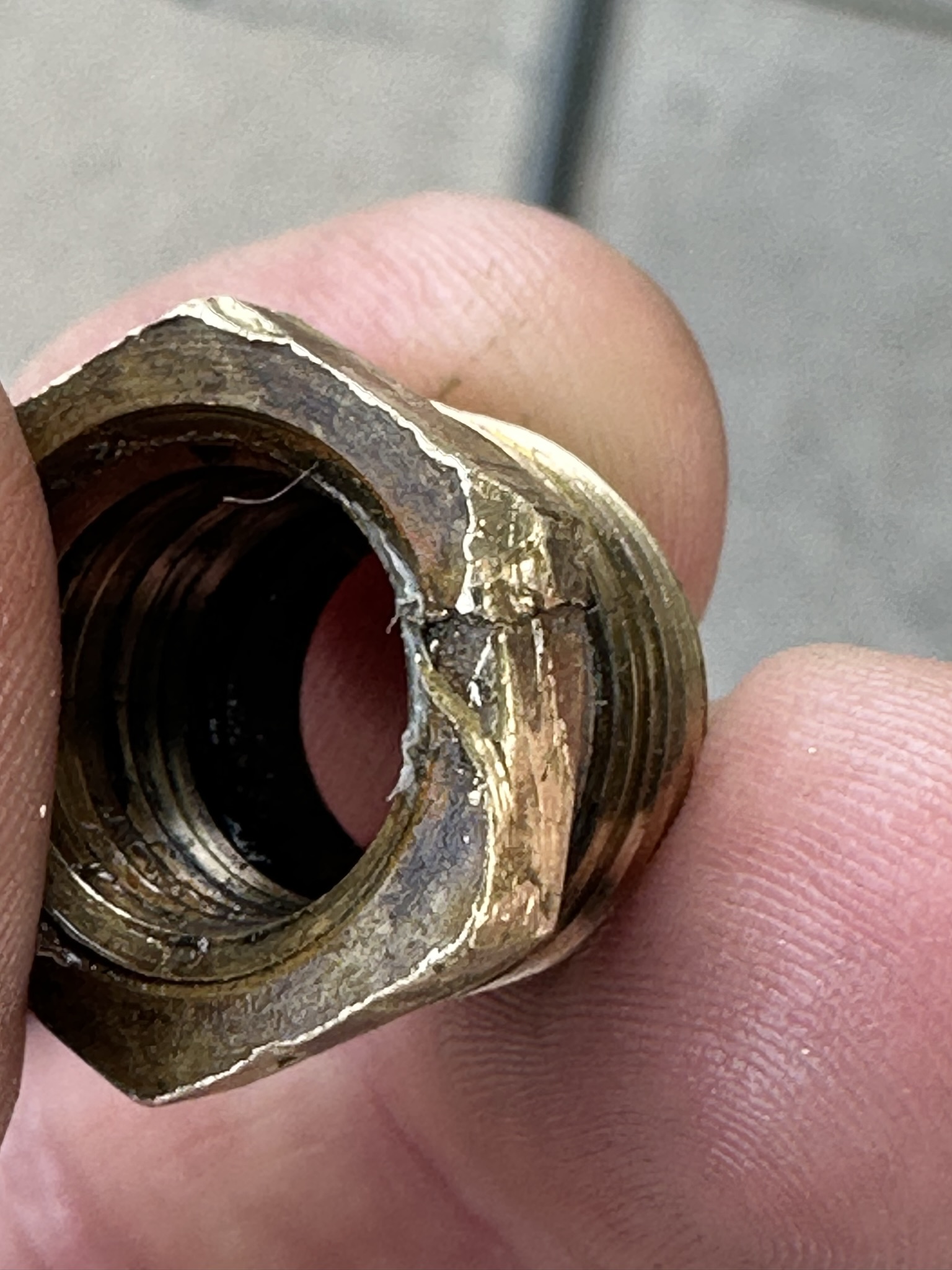
Where does the air come from? Great question. It is VERY hard to diagnose in complicated setups like our Lehmans on the boat. I’ll give a couple scenarios:
A – there’s a tiny leak on the pressure side of the lift pump. You’ll usually find the fuel leaking and dripping somewhere while the engine runs. When the engine sits for a while, especially when your tank is lower than the engine, gravity will pull the fuel towards the tank. If there’s a leak, the fuel will be replaced with air. When you try to start the engine, it may run for a dozen or so seconds or try to fire, and the engine will die. You can mitigate this by making sure your Racor check valve is in good operating order, or install inline check valves. I’ll note these in the filter section below.
It could be a leak in the on-engine filters that are usually on the pressure side of the lift pump, like the Simms filters on our Lehmans. It could be a compression fitting or even a crack in the filter housing, but usually gaskets or a filter element not seating properly.
B – On the suction side of the lift pump, the lift pump pulls a vacuum against the fuel line, and usually the fuel filter. If there’s a leak you can’t necessarily detect it by spotting leaks. The lift pump will draw air and push it onto onboard filters if you have them, like Lehman 80/120’s do. The leak is usually o-rings in the Racor filter, bad hose clamps on the fuel lines or bad fuel line. Sometimes a bad fuel line can collapse under vacuum and cause air to suck in somewhere it normally wouldn’t. Sometimes the tank’s lift tubes can go bad and draw air as the tank empties.
At the intersection of the Potomac River and the Chesapeake Bay in rough weather, gunk at the bottom of the tank was stirred up. The lift tubes sucked up the gunk and caused one of our engines to stop. We made it to Olverson’s Marina to troubleshoot. After an exhausting effort, I found the gunk stopped up the check valve. I’d prime the fuel system, the lift pump would suck as much fuel as it could get, then air would enter the system under the tremendous vacuum produced, wherever it could and stop the engine.
Fuel Filters and Water Traps
Water and trash are the enemies of all engines, ESPECIALLY diesel engines. Remember I mentioned water in the injector pump, and the precision nature of the injector pump and injectors (remember the spray pattern?). You HAVE to keep water and trash out. Water can condense in a half full diesel tank. It can come from your jerry cans sitting in the rain. A squirrel could sharpen its teeth on your tank cap on the tractor and rain water could enter. Usually the solution is a water trap / filter like the Racor.
The boat has Racor 500 style filter traps on the suction side of the lift pump. The filter element is in a canister. The fuel enters a transparent bowl where the heavier water settles. The fuel then moves through the filter element on to the lift pump. On occasion the hopefully small amount of water can be drained through a valve or bleed bolt on the bottom of the bowl. If you accidentally put 10 gallons of water in your diesel tank instead of your water tank, the bowls will fill with water and kill both of your engines just outside your marina as you leave on a 7 day trip.
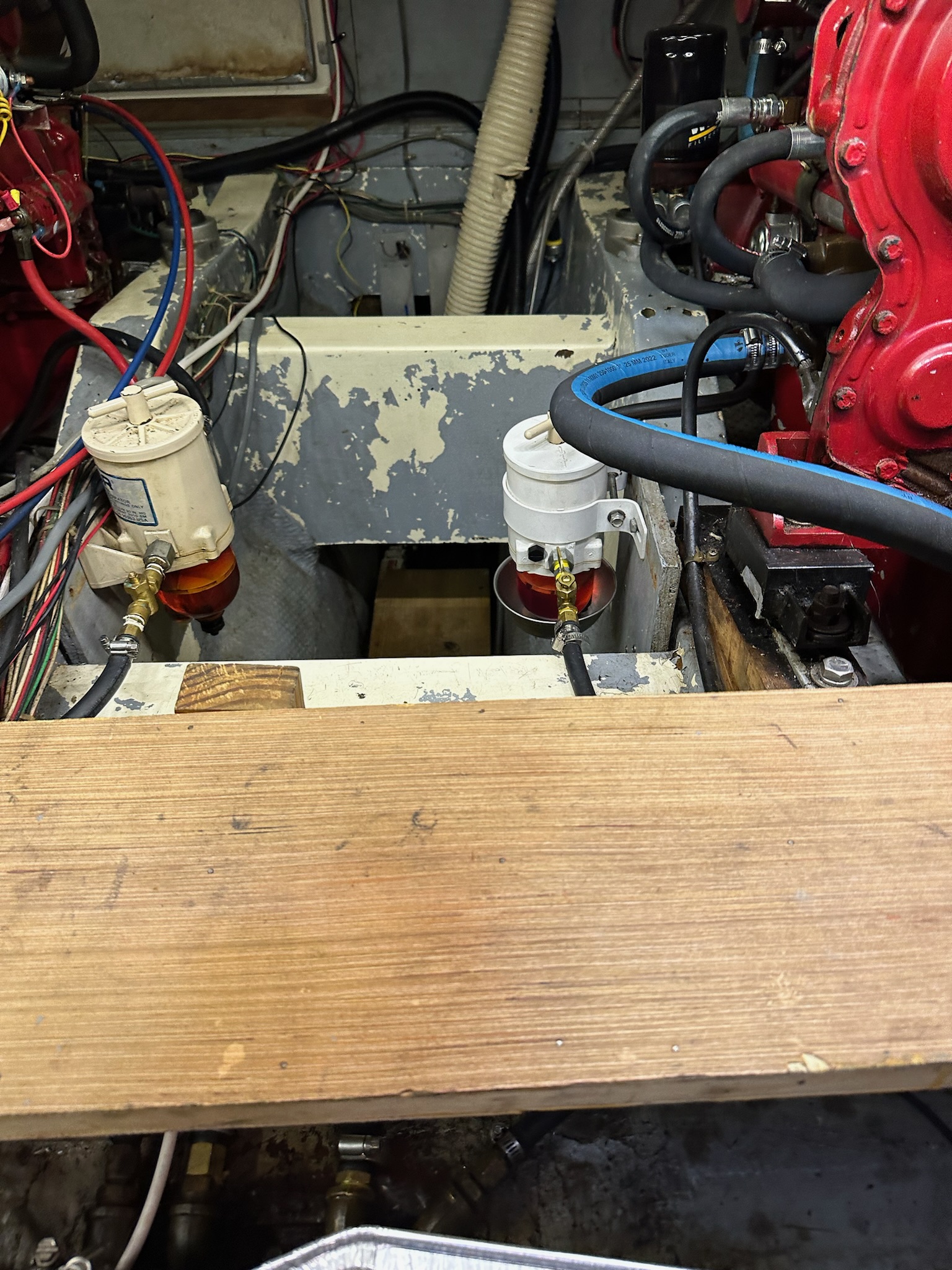
You need to be sure these Racor canister filters are well maintained. They need to be rebuilt with fresh o-rings on occasion, and don’t be stingy changing the filter elements. Our Lehmans use the 30 micron filter elements because the on-engine filters are like 10 or 15 micron and will “polish” the fuel before it enters the lift pump.
Racors, if you open the lid to change the element or to drain gunk out of the trap, will need to be refilled. It has to be filled as close to overflowing as possible. This can’t be done very well in rough seas. You may be able to see the fuel valves installed on both sides of the filter so less air will get in the system when you do this. I removed some of the valves as suspect air producers. They can leak air in just like any other item in the suction side.
A note about the on engine filter – from the filter to the injector pump is plumbed with rigid steel lines. Everything else uses soft lines. If the soft lines start to deteriorate for any reason, the on engine filter will catch the gunk. The steel line between the on-engine filter and the injector pump should not deteriorate (unless water sits in them).
Check Valves
Check valves are usually in place in systems where the fuel is not gravity fed. They help slow gravity from leaking fuel back down into the fuel tanks.
Racors also have an unreliable ball check valve built in. On the Gulfstar, we have the Racor check valve and originally had barbed fitting check valves on the fitting on top of the riser tubes. Since the barbed fitting check valves were straight thread (appropriate for outboard gas fittings) I took them out of the system and replaced them with some I found online. The ones I used had holes in them that were too small. When we got in rough seas in the Chesapeake, one check valve got clogged and shut one engine down. I just took it out of service.
My answer to check valves is – I don’t have a good answer. When selecting look for good fuel flow, thread tapers to match, no small holes that can get clogged with tank gunk. Some day I’ll figure this out completely, maybe.
Tank Gunk
I’m going to share what I know about tank gunk. Diesel tanks, especially ones that are somewhat empty, will grow gunk. When diesel gets water in it, it sinks to the bottom of the tank. There, it’s a perfectly good environment for some weird bacteria to live in the water and “eat” the diesel. If you look in the bottom of the tank, that’s what that slime is in most tanks.
Moisture can enter three ways. First, it can come through a leaky fuel cap in the rain, especially on boats. Check the o-ring on the deck fitting and make sure it’s as good as you can get it. Also store fuel containers out of the rain if you can, for example for our tractor.
Second, moist air enters the tank, and through hot/cold cycles, can condense in the tank. Keep your tanks as full as you can afford to minimize the amount of moist air.
Third, when you’re really tired, you can stick the water hose in the wrong deck fitting and put 10 gallons of water in your diesel tank. Just don’t do this. Be super careful not to do this. And DEFINITELY don’t put fuel in your water tank (I haven’t done this yet). Be extremely paranoid and MAKE SURE you don’t do either.
If you put water into your diesel tank, you’ll have to pump it out. Yes, I did this on the Gulfstar. I used an auxiliary pump, some random hose and a piece of rigid copper tube to reach the bottom of the tank through the dipstick hole. Fortunately we were leaving on a 7 day trip to move the boat, and we could empty any random water from the Racor traps every day before gunk started growing.
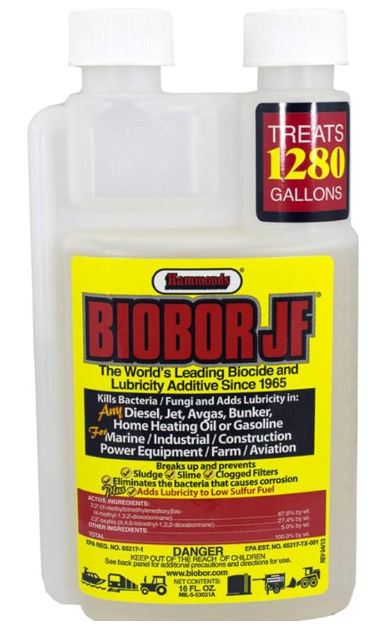
Additives to your diesel can be effective in reducing gunk. We have used Biobor JF Biocide in our tank. I guess it works. It was recommended by others but I don’t have enough experience or any formal test results to personally vouch for its effectiveness.
Conclusion
I’m going to stop right there. I thought about talking about timing, but I really don’t know much about that. I really just hope something I talked about here might help someone. It’s not going to give you a prescriptive solution to your problem, but all of this will hopefully help you think through your problem and maybe so you can resolve it. Don’t waste too much time either. Hire a professional if you’re in over your head.